
Letters to the Masters. No. 9 - Renoir
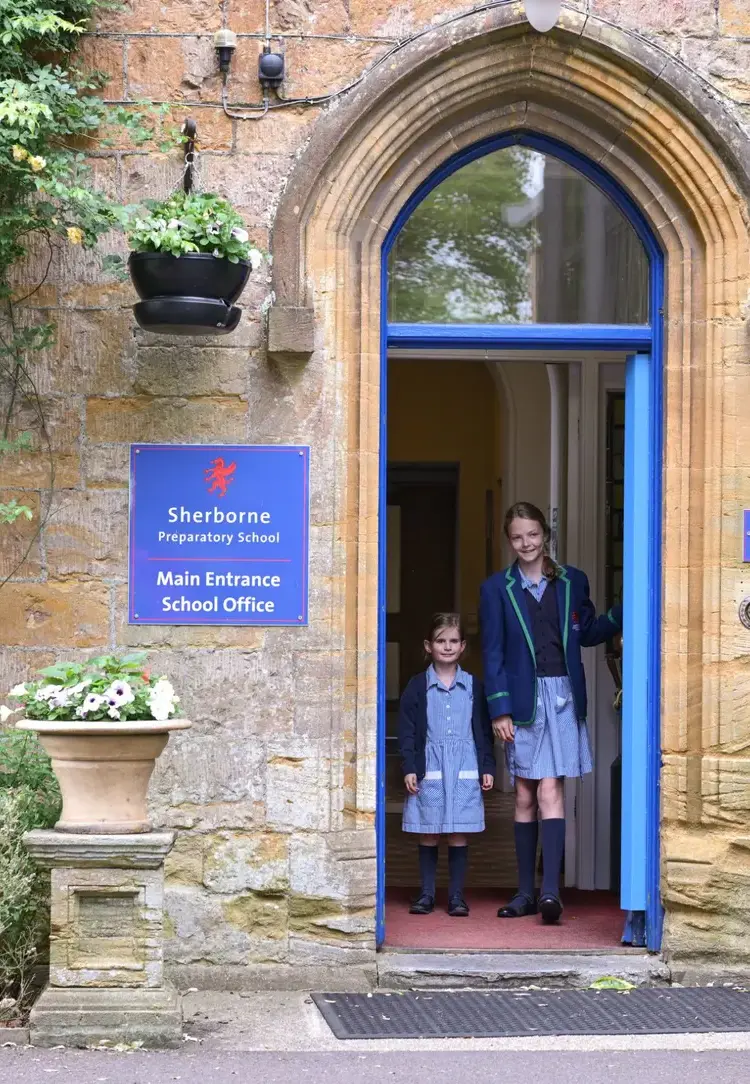
The following article by Sherborne Prep's Head of Art, Fernando Velázquez appeared in the Sherborne Times.
Dear Monsieur Renoir,
I am writing to you as a painter from the future. I must begin by saying that your work continues to enthral lives all over the world, even today, so long since you left us. Your paintings are not preserved as relics – they still breathe, and they are loved by many. I have always wanted to ask you questions about your career, how you began and how you felt working among the Impressionists and such formidable artists as Monet, Pissarro and Sisley.
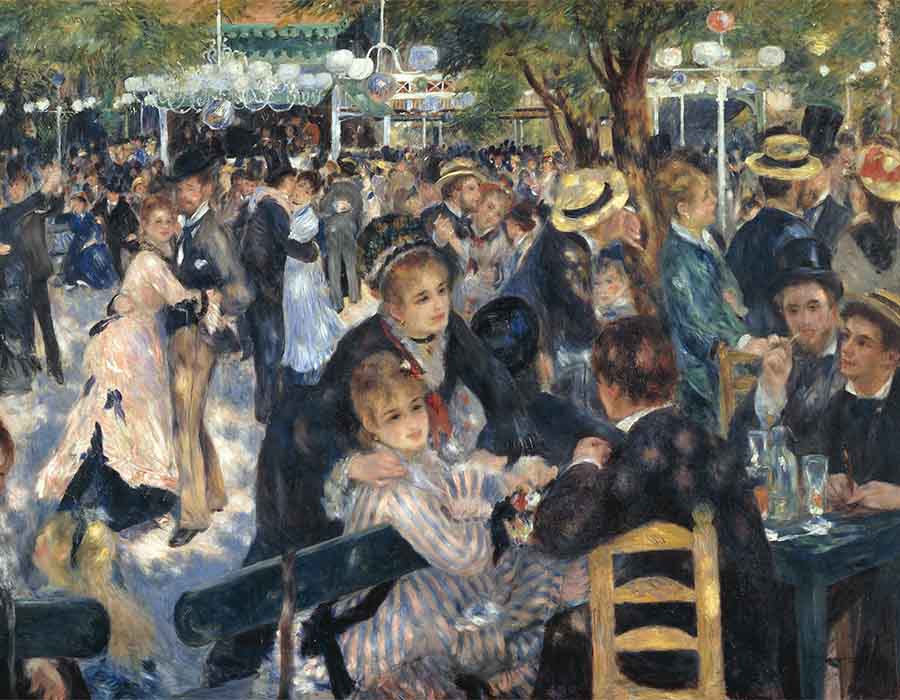
I have read extensively about your life and work, yet reading is never enough. I longed to somehow hear your voice. Recently, I had the wonderful opportunity to stand in front of Le Bal du Moulin de la Galette (1876). It is a painting of light, life and movement. It communicates joy without excess. It hangs today in the Musée d’Orsay in Paris, where every day it gathers crowds who seem united by its warmth. Standing there, I felt compelled to speak to you, and I wondered how you felt about your masterpieces and whether you sensed their importance as you painted them.
I know that success for you took time, and I would love to know your thoughts about the Salon and the critics who once rejected you and later praised your work. Did recognition bring peace to you? I have so much to tell you, but perhaps what interests me the most about your vision is your unique position within the avant-garde while looking so deeply into the past. You loved Raphael and Rubens while painting the modern Paris of your time, an approach that showed tradition and originality.
I write this letter knowing, of course, that we belong to different times and yet, in front of your paintings, I can hear you saying that art, at its best, is an affirmation of life itself across time.
With gratitude from the future,
Fernando Velázquez
Dear Mr Velázquez,
Your letter reached me across a distance I cannot pretend to fully understand, yet its spirit is familiar. Painters always speak the same language, whatever the century. I thank you for your generosity and for standing before my work with such attentiveness. If my paintings still live, it is because eyes like yours continue to meet them.
You ask how I began. I will answer you plainly: I began by painting on porcelain because it fed me, and I fed myself on painting because I could do nothing else. I did not choose art as a destiny – it insisted on me. I learned by observing, by copying, by failing constantly. One never stops beginning. In my time, as you know, there were many good painters around – they called us Impressionists. We were united by dissatisfaction, by a desire to escape the heaviness of academic painting. But each of us wanted something different. Monet chased light, Pissarro structure, Degas movement. I chased people, to convey some sort of joy. We were companions more than soldiers in a single cause. We argued, doubted and borrowed from one another. Yet I never wished to dissolve entirely into a group. I needed my own pleasures, my own warmth. I have always believed that a painting should give happiness, at least a little, otherwise, why make it?
You speak of Le Bal du Moulin de la Galette, and I am moved that you stood before it. When I painted it, I was not thinking of importance or posterity. A painting is never a masterpiece while it is being made. I wanted to paint people as I loved them, alive, close to one another, touched by light. The movement, the noise, the fleeting smiles, all this was Paris to me. If the painting still attracts visitors, I think it is because people recognise themselves there, even if they do not know why.
You mentioned the Salon and the critics. I will tell you this, Mr Velázquez: rejection wounds but it also sharpens. The Salon turned its back on us for years, and when it finally opened its doors, it did so without apology. I accepted success with relief, not triumph. It allowed me to work without fear of hunger, but it never replaced doubt. Critics never painted a single good picture for anybody! They changed their minds more easily than painters change their vision!
You are right about my passion for the old masters. I never believed that looking backwards prevented one from moving forward. On the contrary, the old masters taught me how to construct beauty, how to give flesh its warmth, how to make a painting hold together. Innovation without memory is empty. Tradition without risk is dead. One must hold both at once, even if it is uncomfortable.
In my later years, when my body failed me, painting became even more essential. I tied the brush to my hand not out of heroism, but necessity. As long as I could paint, I was still myself. You write to me as a painter from the future. Then allow me to answer you as a painter speaking to another. Remember this: the act of painting is stronger than pain, stronger than opinion, stronger even than time. Do not worry too much about movements or judgments. Look closely. Love what you paint. And never forget that art, at its deepest, is an act of faith in life.
With highest regards
Pierre-Auguste Renoir